An Agorist Analysis of the State School System
Does school serve education or control? This analysis examines the history of compulsory schooling, its roots in the Prussian system, its role in the Third Reich and the GDR — and presents decentralized alternatives.
Disclaimer: This work serves the purpose of enlightenment and expanding awareness, and follows the agorist principle of peaceful and holistic problem-solving. The research findings serve to improve our shared social coexistence as a human family and are made freely available to all interested parties at all times. The research was conducted without financing, support, or motivation from third parties and is based on freely accessible information. This work was created for purely informational and non-commercial purposes.
Abstract
The state school system in Germany and worldwide is officially regarded as a central institution for socialization and equal opportunity. This analysis argues that the education system serves more as an instrument of ideological conditioning than of genuine education. Since the transition from ecclesiastical to state control over the education system in German-speaking regions during the Reformation, through to the development of the Prussian school system, centralized and compulsory state education has served the purpose of shaping loyal and conformist citizens. Historical examples such as the Third Reich and the GDR document how education was misused to enforce inhuman ideologies and show patterns of uniformity and propaganda. The study reveals that similar mechanisms persist in the 21st century through topics such as militarization, prebunking techniques for information control, and forced digitalization. This paper aims to illuminate these mechanisms, question the true functions of the school system, and present alternative, decentralized educational models.
Keywords: Agorism, solutions, school system, educational decentralization
Introduction
The public school system is, for most people in Germany and around the world, an immovable concept of our society and a part of the modern Western world. School is considered a central place of socialization where children not only acquire knowledge but also learn to interact with peers, develop social skills, and become part of society. Estimates suggest that approximately 160 to 180 countries worldwide have some form of compulsory schooling.
Compulsory education in Germany is considered particularly strict by international standards. Unlike many other countries, such as the USA, Canada, or the United Kingdom, homeschooling is fundamentally prohibited in Germany and mandatory in-person attendance is required. While Germany does have private schools and alternative education systems such as Montessori or Waldorf schools, these also fall under state supervision and must implement the prescribed curriculum.
Germany’s Basic Law additionally stipulates in Article 7 that “The entire school system shall be under the supervision of the state.” [1]
All children are to receive a standardized, state-prescribed education in a controlled environment. In serious cases, this mandate is enforced with legal force. Parents who do not send their children to school face fines and the loss of custody through state authority. Compulsory schooling in Germany extends over 9 to 12 years, depending on the federal state.
Officially, strict compulsory education in Germany is meant to promote social justice, integration, equal opportunity, the economic stability of the country, and the values of a democratic society. State school attendance is meant to ensure that all children have access to a broad and high-quality education. The state also promotes school attendance as providing a certain protection against neglect and abuse.
And although school is very well established as a social and community institution and can undoubtedly help individual children from neglected family situations, there have been persistent critical voices against this system from the very beginning of compulsory state education worldwide. Critics claim that compulsory schooling is used by governments and educational organizations to influence and manipulate the minds of young people — that compulsory state education is used as an instrument of state formation and control to shape loyal and submissive citizens in relation to the status quo.
It should not be forgotten that there was also compulsory schooling in the Third Reich and the socialist GDR. Even in those times, the state officially advertised the same arguments as are made today. At that time, the ruling class used the state school system to teach demonstrably inhuman ideologies through fascism and communism, and to steer people through uniformity and propaganda.
Have we overcome these mechanisms by now, or are they still just as relevant as they were then? How well-founded are the accusations against compulsory state education? And what role does state education play in influencing young people?
To satisfactorily answer these questions, we must examine the beginnings of the school system — or in other words, we wish to engage with the historically developed organized transmission of knowledge through centralized institutions in human society. For although the origins of the modern German school system can be traced back to the Prussian reforms of the 19th century, the history of modern instruction is considerably older.
The Origins of Modern Knowledge Transmission
Already in ancient Greece, two fundamentally opposing philosophies confronted each other, shaping instruction and learning with their different didactic approaches right up to the present day. If we are to believe the official traditions from ancient Greece, there were the so-called Sophists — these wandering teachers addressed themselves primarily to wealthy young people in order to impart universal education and the art of rhetoric to them. Their method was clearly structured: they assumed that knowledge can be taught and learned. In their view, the teacher’s task was to transmit the required knowledge directly to the student. The student must absorb, retain, and apply this knowledge. The art of eloquence was paramount, since rhetorical skills in ancient Greece were considered the key to success in politics and society. This method largely corresponds to today’s school system and can be described as instructive or teacher-centered teaching. The teacher is expert and authority, passing on knowledge to students, while the student’s role is passive.
The Sophists’ instructive method was confronted by a diametrically opposing view. This alternative was represented by Socrates and his students, most prominently Plato. Socrates founded a dialogical method based on the premise that nothing should be taught to the learner that they could not recognize from within themselves. In this approach, the teacher does not stand at the forefront as a mere transmitter of knowledge, but as a questioner and companion. The learning process is a joint inquiry in which the student becomes active and finds truth through their own thinking.
In his renowned work The Republic, Plato describes a very demanding, gradual educational process that leads from sensory perception to the recognition of the Good. This is closely connected to the Socratic idea that knowledge is not simply taught, but attained through self-knowledge and inner understanding.
The famous allegory of the cave illustrates Plato’s conception of education as a process of liberation from ignorance. In the allegory, people are in a cave and can only see shadows on the wall, which they take for reality. Only through a long process of self-knowledge and insight can they leave the cave and recognize the true light — that is, truth and the Good. This allegory illustrates that education is not the simple transmission of facts but a transformation of the mind through understanding.
These two philosophies remain diametrically opposed to this day and can serve as the boundary pillars of the human spectrum of knowledge transmission.
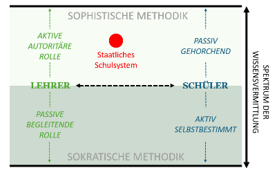 Figure 1: Spectrum of knowledge transmission
The Beginnings of the State School System
The development of the education system in German-speaking regions can be traced back to the early Middle Ages. The first educational institutions of that era were organized and operated primarily by ecclesiastical forces. The cathedral and monastery schools of the time pursued religious education and the reproduction of ecclesiastical hierarchies as their central task. The few parish schools integrated into this structure also provided access to education for children from less privileged backgrounds, but with the goal of preparing them for lower religious or church-related tasks. [2]
With the Reformation in the 16th century, a shift began from the Church to the State as the leading centralized authority behind the education system. Martin Luther and the Reformers recognized the central importance of education for the spread of their religious ideas and for building a competent, believing society. As a result, education and schooling were reorganized and established as a core task of both Church and State. As early as 1524, in his treatise “To the Councilmen of All Cities in Germany” [3], Luther demanded that every city establish schools. Luther called upon the princes to establish and finance schools, which led to the increasing state control of education.
The core task of educational institutions was no longer to transmit the Christian faith, but to foster loyalty to the state and the ruling powers — often with set school regulations and standardized content.
In the 18th century, the state established itself as the new guiding force in the field of education through the introduction of compulsory schooling and the expansion of school administration. The education system was now more or less independent of the Church, but continued to serve the prescribed transmission of political and social values.
The additional reforms of the 18th century under Frederick William I and later under Frederick the Great then laid the foundation for a nationally unified education system. The Prussian school system subsequently developed into one of the most effective and influential education systems in Europe. It set standards for compulsory schooling, state influence, universal education, and shaped education systems worldwide.
While individual Protestant countries such as Reformed Switzerland or the Scandinavian countries introduced compulsory schooling based on the Prussian system as early as the 16th century or at the latest in the 17th century, Catholic Austria waited until 1774, Bavaria until 1802, and the similarly Catholic countries Italy and France until 1877 and 1882 respectively. During this period, the founding ideas for what would later become public schools were planted in nearly all countries.
In Germany, since the Reich Elementary School Act of 1920 and the newly introduced elementary school for all children, attendance at a public school became compulsory. The school-type-specific preparatory schools that had been common until then were to become a thing of the past, as was the legal and therefore common practice in some German states of wealthy parents having their children privately educated by tutors. Nevertheless, even after the passage of the Elementary School Act, parents with dissenting views repeatedly managed to obtain legally available exemptions for their children. The last private preparatory schools and the practice of private instruction were not completely abolished until the 1930s. [2]
The Role of the State School System in the Third Reich
The National Socialist regime between 1933 and 1945 deliberately used the state school system in Germany to promote its ideological goals and systematically indoctrinate the youth. On the basis of existing compulsory schooling and state influence over all educational institutions, free access to the young minds of the nation was obtained, and they could be shaped and steered according to the regime’s own dictates. Education became an instrument of political propaganda, uniformity, and indoctrination.
Biology, history, and geography were heavily influenced by National Socialist ideology. The curriculum was aligned with military values such as obedience, discipline, and readiness for combat. German history was distorted to underpin the National Socialist worldview. The concept of the “Volksgemeinschaft” (people’s community) was taught as the guiding idea, to subordinate individual freedom to the collective good. The goal of education was not individual development, but the raising of a loyal, compliant, and obedient citizen. Critical thinking was systematically suppressed. Textbooks were rewritten and strictly controlled ideologically. [4]
After 1945, the Allies pressed for a fundamental reform of the school system, which they held significantly responsible for fostering authoritarianism and a subject mentality. Ironically, this reform ended in a lengthening of compulsory schooling and an intensification of state influence on the young minds of the nation. Indeed, the school legislation drafted in the states created at the Allies’ instigation from 1946 onward called for the extension of elementary school by at least two years. [5]
Evidently, state influence over the transmission of knowledge to the nation’s youth was only considered dangerous and wrong by the Allies for as long as they themselves could not dictate the worldview to be taught.
The Role of the State School System in the GDR
The state school system in the GDR was used by the new socialist regime as an important instrument to shape society ideologically and to ensure loyalty to the Socialist Unity Party of Germany (SED) and to the Marxist-Leninist worldview. Educational policy was strictly centralized and aligned with the needs of the socialist state.
In 1965, the GDR introduced the so-called “unified socialist education system.” The official aim was to eliminate social differences and guarantee equality for all students. Curricula, textbooks, and teaching materials were prescribed centrally by the Ministry of People’s Education in coordination with the SED. All content was ideologically reviewed.
All subjects, even ostensibly neutral ones like mathematics or natural sciences, were used to transmit the Marxist-Leninist ideology. History and civics were particularly important subjects in which the superiority of socialism and the hostility of capitalism were emphasized. The subject of civics served political education and taught the foundations of Marxism-Leninism, the role of the SED, and the significance of the GDR as a socialist state.
The goal was the education of a “socialist personality,” characterized by obedience, collective thinking, discipline, and loyalty to the GDR. Students were taught to subordinate their interests to the needs of the community. Teachers were selected based on their political convictions. Only ideologically compliant teachers who represented the SED’s ideology were permitted to teach. Teachers considered critical were dismissed or monitored.
The state school system in the GDR was a central pillar of the socialist dictatorship. It served less for individual education than for the cultivation of ideological conformity and adaptation to socialist society. Critical thinking was suppressed, and education was heavily politicized.
The State School System in the 21st Century
Both in the Third Reich and in the GDR, the state school system was used by the ruling class as a tool to infiltrate and condition the young minds of the nation with their own ideologies. The methods reveal a recognizable pattern and show numerous parallels in how both regimes used the education system as a central lever for their ideological goals and control of society:
- Curricula and teaching materials were adapted in the sense of ideological conditioning.
- Critical thinking was suppressed, while blind obedience and support for the ruling ideology were promoted.
- Teachers with dissenting views or educational approaches faced disciplinary measures or were removed.
- The subordination of individual freedoms to the benefit of the community and the common good was highlighted as a virtue.
- School education served to prepare students for the respective economic and military needs of the ruling system.
So what is the state of today’s education system? Has the school system been successfully reformed, or are we still confronted with the same patterns? Does the state school system still serve the ruling class today as a welcome tool for shaping the youth and planting the roots of its ideologies in the young minds of the nation?
Let us take an honest look at our times:
Example 1: Militarization
Over recent decades, we have seen increasing cooperation between state schools and the German Armed Forces (Bundeswehr), with the goal of inspiring the youth for war and armed service. In March 2024, for example, the then Education Minister Stark-Watzinger spoke in favor of a more relaxed relationship between schools and the Bundeswehr. [6] Schools are to prepare children for wartime scenarios, for which youth officers are to promote the Bundeswehr’s work at schools. According to an official statement by the then red-green federal government from April 2024, in 9 federal states there are cooperation agreements between state ministries of education and the respective state commands of the Bundeswehr. [7]
The children’s rights organization “Terre des Hommes” writes on its website, quote:
“The Bundeswehr is increasingly targeting children and adolescents in a deliberate and one-sided manner: Before the pandemic, the Bundeswehr’s youth officers and career advisors alone reached more than 400,000 students every year in schools, including children as young as eleven.” [8]
In this particular example, the cooperation between state schools and the federal government is very evident. Far more questionable and dangerous, however, are the subtle attempts to steer and shape the worldview of young people in line with state doctrine.
Example 2: Uniformity
In March 2022, the European Parliament agreed to a proposal for a so-called “expert group on combating disinformation and promoting digital literacy through education and training.” With this proposal, European governments are pushing from the top down into public schools to focus — quote — “…among other things on critical thinking, teacher training, prebunking, debunking and fact-checking as well as student engagement.” [9] This sensitization of children to disinformation — as it is officially described — is to be implemented hand in hand with comprehensive digitalization of schools.
The proposal of the European special commission states, quote: “whereas preventive and proactive measures, including prebunking, are far more effective than subsequent fact-checking and debunking of claims, which have a lower reach than the original disinformation… calls on all member states to incorporate media literacy and digital literacy from early youth through to adult education in their curricula.” [10]
Prebunking is a new technical term from inoculation research, originating in the intellectual think tanks of various elite universities. Prebunking can be understood as the opposite of debunking. Whereas debunking retrospectively examines claims that have been made, prebunking is meant to condition the recipient’s psychological stance so that questionable claims are rejected in advance. [11]
This understanding is already being followed by state-funded educational games for students such as Fake it to Make it [12], Go Viral, or Get Bad News [13]. The online game Fake It To Make It was translated into German by the Federal Agency for Civic Education and comes with the provision of some materials for use in school lessons.
One of the developers of the second educational game Get Bad News is the renowned researcher Sander van der Linden of Cambridge University and one of the leading advocates of the so-called inoculation theory, which is closely linked to the concept of prebunking.
In an accompanying study to a prebunking trial run conducted in cooperation with YouTube, Van der Linden explains this latest methodology for conditioning young people as follows:
“Inoculation theory follows an analogy to medical immunization and assumes that it is possible to build a psychological resistance to unwanted persuasion attempts, similar to how medical vaccinations build physiological resistance to pathogens. Psychological inoculation treatments contain two core components:
- A forewarning that generates a sense of threat from an impending attack on one’s attitude, and
- A weakened (micro-)dose of misinformation that contains a preemptive rebuttal or pre-judgment of the expected misleading arguments or persuasion techniques.” [14]
In other words, the aim is to instill a predefined rejecting response in students’ minds toward certain content.
The expert group on media education for the inoculation of students, commissioned by the European Parliament, was already able to present initial results with guidelines for teachers in the same year 2022. [15]
By now there are countless nationwide projects providing appropriate teaching materials along the lines of inoculation theory and prebunking, and training the teaching staff. For the large-scale marketing of this new strategy, the federal government also draws on public broadcasting stations, which were already identified in our analysis of the German media landscape [16] as mouthpieces of capital and power. For example, NDR with its project Conspiracy Theories on the Internet [17] provides corresponding teaching materials. Here, the equally popular and manipulative strategy is employed of associating any contradiction to the government’s existing narrative or the dominant published opinion with exaggerated stories.
Another such example is the platform Anders Denken (Think Differently) [18], supported by various state bodies. Here, students are conditioned through playful team tasks, using examples of particularly absurd theories, to reject anything labeled a “conspiracy theory.”
The EU Parliament and the German federal government promote this influence on our youngest generations as combating disinformation and promoting digital competence — yet the question must be allowed: who decides what constitutes disinformation here, and exactly which competencies are the focus? On closer examination, these new guidelines, prebunking, and inoculation represent more of a firewall and uniformity mechanism for the child’s mind. The educational effect ultimately consists of training young people to personify social currents and to suspect a conspiracy of “malicious actors” behind opinions that displease the ruling institutions. Students are ultimately meant to become, through psychological manipulation, more resistant to system-critical arguments.
Example 3: Digitalization
One of the most intensely debated topics in today’s education system is the increasing digitalization of schools. Proponents see in it a historic opportunity: digital technologies could democratize education, enable individual support, simplify access to knowledge, and prepare schools for the demands of the 4.0 working world. Since the Digital Pact of 2017 between the federal government and the IT industry, equipping educational institutions with WiFi, smartphones, and tablets has been regarded in education policy as the hallmark of unavoidable progress. [19]
Critics, however, warn against premature technologization without pedagogical foundations. They point to empirically documented risks such as attention deficits, media dependency, social isolation, and health damage in children and adolescents.
Cross-state education policy in Germany is driven primarily by the Standing Conference of the Ministers of Education and Cultural Affairs (KMK) — a consortium of the ministers responsible for education, higher education, research, and culture from the 16 German federal states — and the Federal Ministry of Education and Research (BMBF).
According to its rules of procedure, the KMK deals with “matters of education policy, higher education and research policy, and cultural policy of supra-regional significance with the aim of forming common opinions and wills and representing common concerns.”
With an annual budget of around 50 to 60 million euros generated from taxpayers, the KMK is working intensively on a comprehensive digitalization of the German education system. [20] To this end, the KMK introduced the action plan Education in the Digital World in 2016 for the integration of digital media into teaching. To implement this strategy, the support program DigitalPaktSchule was additionally launched. [21] The federal government provided a volume of 5 billion euros between 2019 and 2024 to improve the digital infrastructure of schools. The follow-up program DigitalPakt 2.0, with a similar total volume for the period 2025–2030, is also already being developed.
In the current annual report of the Standing Conference on Education in the Digital World for the period August 2023 to July 2024, it states: [22]
“During the reporting period, the states have steadily expanded their training offerings. The focus in terms of using digital media and strengthening digital competencies in training offerings is increasingly being placed on interactive and adaptive teaching and learning scenarios. In addition to the topic complex of artificial intelligence and ChatGPT, topics such as the use of 3D printers, working with VR and AR formats, the use of tablets in lessons, coding and programming, fake news, and conspiracy theories are being addressed.”
Critical voices regarding these developments point to the unforeseeable health consequences for children. For example, the psychologist and neuroscientist Prof. Manfred Spitzer from the University of Ulm commented on the KMK’s report in 2022 with his own analysis. [23]
He points to scientifically documented risks such as lack of exercise, obesity, high blood pressure, sleep disorders, shortsightedness, and psychological problems such as attention deficits, anxiety, depression, and addiction as a result of intensive use of digital screen media by children and adolescents. Furthermore, according to Professor Spitzer, media use impairs empathy, life satisfaction, and the capacity for solidarity.
In June 2023, the Guideline for the Prevention of Dysregulated Screen Media Use in Childhood and Adolescence was published as a joint recommendation by eleven German professional associations from medicine and psychology, led by the German Society for Pediatric and Adolescent Medicine (DGKJ). [24] The guideline recommends a drastic restriction of the use of screen media by children and also criticizes the widespread digitalization of schools and daycare centers.
The guideline states, quote:
“The widespread presence of mobile devices and other wireless networks means that most people are constantly exposed to high-frequency electromagnetic radiation. The effects of this radiation on human health remain unclear. Reliable research findings, mostly from animal experiments, indicate cellular changes up to tumor promotion through electromagnetic fields. The extent to which this is transferable to humans is scientifically controversial, and a clear connection to diseases such as cancer, depression, sleep disorders, addictive behavior, infertility, or electromagnetic hypersensitivity has not yet been established. However, hazards to human health, particularly in children, cannot be excluded at the current state of research.”
In the same year, the Alliance for Humane Education, in cooperation with the Society for Education and Knowledge, drafted a manifesto calling for a moratorium on digitalization in daycare centers and schools. [25]
The moratorium, now signed by many scientists, can be found on the website www.die-pädagogische-wende.de along with many other interesting leaflets and book recommendations. It states, quote:
“Digitalization is currently regarded in the educational sector for all age groups as a timely solution to educational questions. In reality, the effects and side effects of digital media on developmental, learning, and educational processes are scientifically often unclear. Rather, scientific evidence is accumulating on enormous disadvantages and damage to the developmental and educational processes of children and adolescents through digital media. In the sense of the duty of care of public educational institutions, we therefore call for a moratorium on digitalization, particularly in early education up to the end of lower secondary school (grade 6): The consequences of digital technologies must first be assessable before further experiments on children and adolescents in our care, with uncertain outcomes, are undertaken. They have only one life, only one educational biography, and we must not be careless with it.”
According to the updated UNESCO Education Report [26], many education systems, including countries such as Sweden, Spain, Finland, Latvia, and Denmark, are now pulling back and, in light of this evidence, significantly restricting digitalization in schools, or at minimum banning smartphones at primary schools.
Conclusion
How could it happen that state authorities such as the Standing Conference of the Ministers of Education and the Federal Ministry of Education, which were supposed to protect our children and adolescents on behalf of the people, ignore all these scientific findings and, with billions in taxpayers’ money, push forward a wave of digitalization in the educational sector that will have fatal physical and above all mental consequences for an entire generation?
In her dissertation published on ResearchGate in August 2024, titled Governance Transformations and New Forms of Policymaking Using the Example of the Digitalization of (School) Education in Germany [27], philosophy doctorate candidate Annina Förschler examined the various institutions and associations that increasingly operate in complex networks and shape education policy in Germany with regard to digitalization.
In her work, she demonstrates how state actors such as the Standing Conference and the Federal Ministry of Education and Research, in close cooperation with Big Tech corporations, foundations, and intermediary networks such as the Bündnis für Bildung or the Forum Bildung Digitalisierung, are driving the digitalization of schools.
For example, her dissertation states on page 60:
“A new and very active intermediary actor is the already-mentioned ‘Forum Bildung Digitalisierung e.V.,’ founded in 2016. This consortium of corporate foundations has, since its founding, championed ‘digital transformation in the educational sector’ and can draw on extensive resources from the founding foundations (in 2018 these were the ‘Bertelsmann Stiftung’, ‘Siemens Stiftung’, ‘Robert Bosch Stiftung’, and ‘Deutsche Telekom Stiftung’, with funding from the ‘Stiftung Mercator’), as well as their established roles as experts in public and political educational discourse. In particular, the annual ‘Conference on Education and Digitalization’ (KonfBD) has now established itself as an important policy event that offers actors within and around schools from various backgrounds ‘a platform for exchange and networking’ and presents new ideas for shaping the education system.”
Ms. Annina Förschler concludes that the digitalization of education is being misused as a dominant narrative of political modernization, promising educational equity and innovation, while the actual goal is a far-reaching structural transformation.
In this process, schools are being rebuilt into data-producing organizations through the construction of learning platforms, databases, and surveillance tools.
And just as in our analysis of the German media landscape, the Bertelsmann Foundation plays a central role. It is one of the founding foundations and is still a member of the corporate foundation consortium Forum Bildung Digitalisierung (fbd), and was a central actor in the agenda-setting for the DigitalPaktSchule. In terms of content, it advocated there for the weakening of educational federalism and the establishment of a National Education Council as an overarching governance instrument. The Bertelsmann Foundation has been actively engaged in the digitalization of education in Germany since at least 2015. That year it began work on the project Monitor Digitale Bildung, and from 2017 on the project Schule und digitale Bildung (School and Digital Education). In addition, it is advancing the concept of all-day schools under the guise of individual support and equal opportunity. [28]
Through cooperations with ministries, platform projects such as SchulTransform, and initiatives such as the DigitalPaktSchule, it promotes technocratic governance and management logic in the education sector, and influences education reforms through studies, conferences, and strategic partnerships.
The main promoters of digital education — Bitkom, Bertelsmann, Microsoft, Apple, Google, and Telekom — are also interested in the sale of hardware and software and in controlling learning through algorithms. The ultimate stage of digital education is envisioned as autonomous instruction in which the centrally controlled computer takes over teaching.
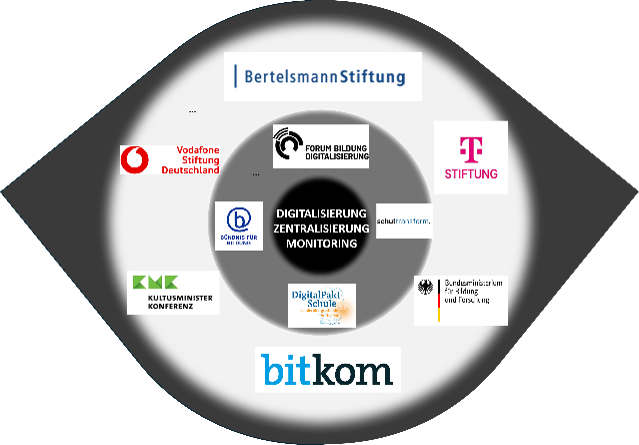 Figure 2: Main promoters of digitalization in the German education sector
Solutions
As our research into the state education system has revealed, there are numerous points of criticism and approaches for improvement.
First and foremost, it is of decisive importance to recognize the patterns and inherent mechanisms of centrally controlled and coercion-based school systems. Even if it is often falsely portrayed otherwise: the state school system does not serve individual education or the promotion of critical thinking. Rather, it is a central instrument for ideological control and the preservation of the status quo. Education is used as a tool of indoctrination to generate obedience, conformity, and ideological compliance. Most graduates will, after a short time, neither master differential calculus nor know which capital city Macedonia has or what the chemical symbol for iron is. But what has been branded into the memory over all those school years — like a mark — is the lifelong doctrine that good and successful people in this society obey authority.
The ecclesiastical monopoly on the education of the people was indeed removed in past centuries, but this monopoly was merely transferred to a new, external authority that is not any less religious in its nature.
Once we understand that, we can free ourselves and our children from the centralized, state-regulated educational model.
In a second step, we should inform ourselves about the existing alternative possibilities and philosophies, so that we can make a better decision in the interest of our children based on self-determination.
While Germany still has a legal compulsory schooling requirement, Austria and some regions of Switzerland have only a compulsory education requirement — meaning parents must ensure their child receives a general education, which does not necessarily have to happen in a school. Parents who wish to educate their children at home can therefore do so in the German-speaking world.
In addition to state schools, Germany also has various free alternative schools such as Montessori, Waldorf, or Sudbury schools, which offer different pedagogical concepts and teaching methods. Of course, these schools must also meet state requirements, and in terms of digitalization and uniformity, some are just as aligned as state schools. Prior research is therefore advisable here.
One of the leading contact persons in the German-speaking world when it comes to the reorientation of the education system is the educational activist Ricardo Leppe. The Austrian memory trainer and magician was himself educated at home for many years and advocates for learning methods that emphasize efficiency, enthusiasm, and sustainability. He combines these with his vision of a decentralized, child-centered school of the future.
Leppe bases these methods on his own body of knowledge and years of experience working with children and educational concepts. In workshops and interviews, Leppe describes his vision of the school of the future as a space in which children learn according to their own inner rhythm and interests; work not primarily for grades, but for understanding and genuine enthusiasm; develop methodological competence (e.g., memory techniques, media literacy, self-organization) as the foundation of all learning; collaborate across age groups and project-oriented; and exist not in a hierarchical, but in a communal learning setting.
He emphasizes that education should be understood as a tool for self-empowerment, not as a coercive system. He therefore wants to promote structures that create more space for individual learning — whether in reform-pedagogical schools, homeschooling, or free educational initiatives.
With his platform Wissen schafft Freiheit (Knowledge Creates Freedom, WSF), he supports existing schools, teachers, homeschoolers, and initiatives worldwide. In Austria and Germany, several initiatives are already working on founding schools that are strongly oriented toward his visions, although they currently exist only on paper. [29]
 Figure 3: Logo of the platform Wissen schafft Freiheit by Ricardo Leppe
On his platform Wissen schafft Freiheit, there are numerous free courses on alternative learning methods, an overview of various networks for schools, initiatives, and teachers to spread alternative educational models, and much more.
It is therefore not surprising that Leppe, due to his demand for educational decentralization, is placed in a right-wing or conspiracy-theory corner by official bodies, media, and watchdog organizations, since decentralization represents a structural loss of power for any government and must therefore be classified as a threat. As we have been able to demonstrate in our analysis, securing one’s own state educational monopoly is an absolute cornerstone of any existing power structure — and it is truly irrelevant whether it is a totalitarian right-wing or left-wing government.
Furthermore, in the German-speaking world there are people like Chris Fader, who raises his own children without school attendance and advises other interested families on this topic through his online courses and coaching. He also offers a platform for this growing community of parents who want to raise their children free from coercion-based education systems. For Fader, the school-free life is more than an educational path — it is an attitude: an attitude of trust and unconditional love. [30]
The fact is that there is a large and growing community in the German-speaking world engaging with alternative education systems through to school-free concepts, and in the age of the internet and decentralized information access, this knowledge is just a click away.
Finally, mention must be made of the Austrian thinker, philosopher, and writer Ivan Illich. He already presented alternatives to traditional school in 1972 in his influential work Deschooling Society. There he called for — similarly to Leppe today — a fundamental reorganization beyond institutionalized education. His vision is a decentralized, self-determined learning culture based on access, networking, voluntariness, and equality.
Thus he writes in his book (page 30):
“Neither learning nor justice is promoted by school instruction, since educators insist on combining instruction with grading. Learning and the assignment of social roles are fused into schooling. Learning thereby means gaining a new skill or insight, while promotion depends on the opinion that others have formed. … Roles are assigned by establishing in a curriculum the canon of conditions the applicant must meet in order to advance. School connects instruction — but not learning — to these roles. That is neither reasonable nor does it have a liberating effect. It is misappropriated because not the relevant properties or abilities are linked to the roles, but rather the procedure through which one supposedly acquires such properties or abilities. It does not have a liberating or educational effect because school reserves instruction for those whose learning step by step meets the standards of a predetermined social control.” [31]
Ultimately, it is important to recognize that the minds of our youth are one of the most precious resources on this earth. We must not entrust the education of our children to a centrally controlled state system or, in the future, to an AI. As we have been able to show in this analysis, the state school system is based neither on moral values nor does it act in the interest of children. We must actively and consciously communicate with our children about these topics. Above all, we must lead by example.
For instance, every third child between the ages of one and eight is rarely or never read to. [32] The motivation to read among the youngest generation is declining ever further. As a parent, make sure that changes!
Those who wish to learn more about the state school system and possible alternatives can engage with the work of Ricardo Leppe and his platform Wissen schafft Freiheit. We also encourage reading the following books:
- Stichwort Schule: Trotz Schule lernen by Vera F. Birkenbihl
- Deschooling Society by Ivan Illich
We also recommend watching the first chapter of Derrick Broze’s documentary series The Pyramid of Power. [33]
References
- “www.gesetze-im-internet.de.” Basic Law Art. 7.
- F.-M. Konrad. Geschichte der Schule: Von der Antike bis zur Gegenwart. C.H.Beck, 2016.
- M. Luther. “To the Councilmen of All Cities in Germany.” schulprojekte-reformation.de.
- “Lebendiges Museum Online.” dhm.de/lemo – School in the Third Reich.
- “bpb.” School history after 1945.
- “ZEIT.” March 2024. Bettina Stark-Watzinger – Disaster drills in schools.
- “Drucksache 20/11164.” dserver.bundestag.de.
- “TERRE DES HOMMES.” Bundeswehr in schools.
- “European Parliament.” TA-9-2022-0064.
- “euparl.” A-9-2022-0022.
- “Nature.” s41599-019-0279-9.
- “fakeittomakeit.” fakeittomakeit.de.
- “getbadnews.” getbadnews.com.
- “Psychological inoculation improves resilience against misinformation on social media.” science.org.
- Agency for Cooperation of the EU. Guidelines for Teachers and Education Professionals on Countering Disinformation and Promoting Digital Literacy through Education and Training, 2022.
- D. Agora. An Agorist Analysis of the German Media Landscape. 2024.
- F. Schwarzbauer. NDR – Conspiracy Theories on the Internet (PDF).
- “anders-denken.” anders-denken.info.
- “Federal Ministry for Research, Technology and Space.” 2017. DigitalPakt — Federal States Working Group.
- “WIKIPEDIA.” Kultusministerkonferenz.
- “DigitalPaktSchule.” digitalpaktschule.de – Finances.
- “Annual Report of the Standing Conference on Education in the Digital World.” kmk.org. 13.12.2024.
- S. Manfred Spitzer. Digitalisierung in Kindergarten und Grundschule schadet der Entwicklung, Gesundheit und Bildung von Kindern. Schattauer, Geist & Gehirn, 2022.
- A. online. medienleitlinie.de. July 2023.
- “aufwach-s-en.” aufwach-s-en.de – Publications.
- “UNESCO.” Smartphones in School.
- A. Förschler. Governance Transformations and New Forms of Policymaking Using the Example of the Digitalization of (School) Education in Germany. ResearchGate, August 2024.
- “bertelsmann-stiftung.” All-day schools – Learning better in diversity.
- Ricardo Leppe. wissenschafftfreiheit.com.
- Chris Fader. chrisfader.de.
- I. Illich. Deschooling Society. C.H.Beck, p. 30ff.
- “stiftunglesen.de.” Reading Monitor 2024. Accessed July 2025.
- thepyramidofpower.net.