In the Shadow of Global Crises
Climate change, pandemics, economic collapse — we live in a time of multiple converging crises. What do they have in common, and how should we respond?
I want to dedicate this platform fundamentally to the presentation of solution-oriented philosophies and alternative perspectives. I focus on the causes of the prevailing power structures rather than on the symptoms. Nevertheless, it is sometimes indispensable to recognize the global geopolitical developments in order to be able to take appropriate measures. We all make strategic decisions in our private and family circles and should therefore remain as well-informed as possible. This article is intended to sharpen your senses for the times ahead. Nonetheless, none of this is inevitable. In fact, it is up to us.
It is often helpful to know the long-term plans and goals of the influential groups from business and politics. I am speaking here, among other things, of the official Agenda 2030 of the United Nations (UN), the "Great Reset" initiative of the World Economic Forum (WEF), or the "Unmanned Future" of Europol. These visions are openly communicated and can be viewed freely with a little personal initiative and research. Even if many extremist forces from the left and right political spectrum misuse these topics for their own purposes, they are by no means a conspiracy theory. To understand global events, it is crucial to understand where the journey is headed.
In recent years, the global COVID crisis seemed like chaos to many. Politicians and high-ranking experts appeared to act on their own initiative and were often overwhelmed by the new situation. People around the world suddenly found themselves confronted with economic shortfalls, face masks, and lockdowns that they could not have even imagined a short time before. However, those who recognized that the most influential institutions and foundations in the healthcare sector had simulated exactly this situation only a few months before the outbreak of the pandemic perceived fine patterns within the great chaos. For instance, the Bill & Melinda Gates Foundation, the World Economic Forum (WEF), and Johns Hopkins University had already simulated and evaluated lockdowns, economic shortfalls, face masks, and even the suppression of emerging protest movements in October 2019 with Event 201.
Shortly thereafter, the field test took place, with the World Health Organization (WHO) setting the pace for centralized leadership. Under the pretext of protection and safety, individual freedoms were restricted, a shortage economy was created, and digital control structures were implemented. In this context, the Great Reset initiative emerged in 2020 together with Prince Charles and his "Sustainable Markets Initiative." Bill Gates and his foundation, which is considered the largest private donor to the WHO, were also on everyone's lips during the COVID years. These self-proclaimed philanthropists, royal families, and politicians claimed to be working for the well-being of humanity. But not least the published Epstein Files shake this image and should seriously prompt everyone to question their own worldview. Many independent investigators of existing power structures therefore understandably speak of the "Epstein class" when referring to the ruling elite of power and capital.
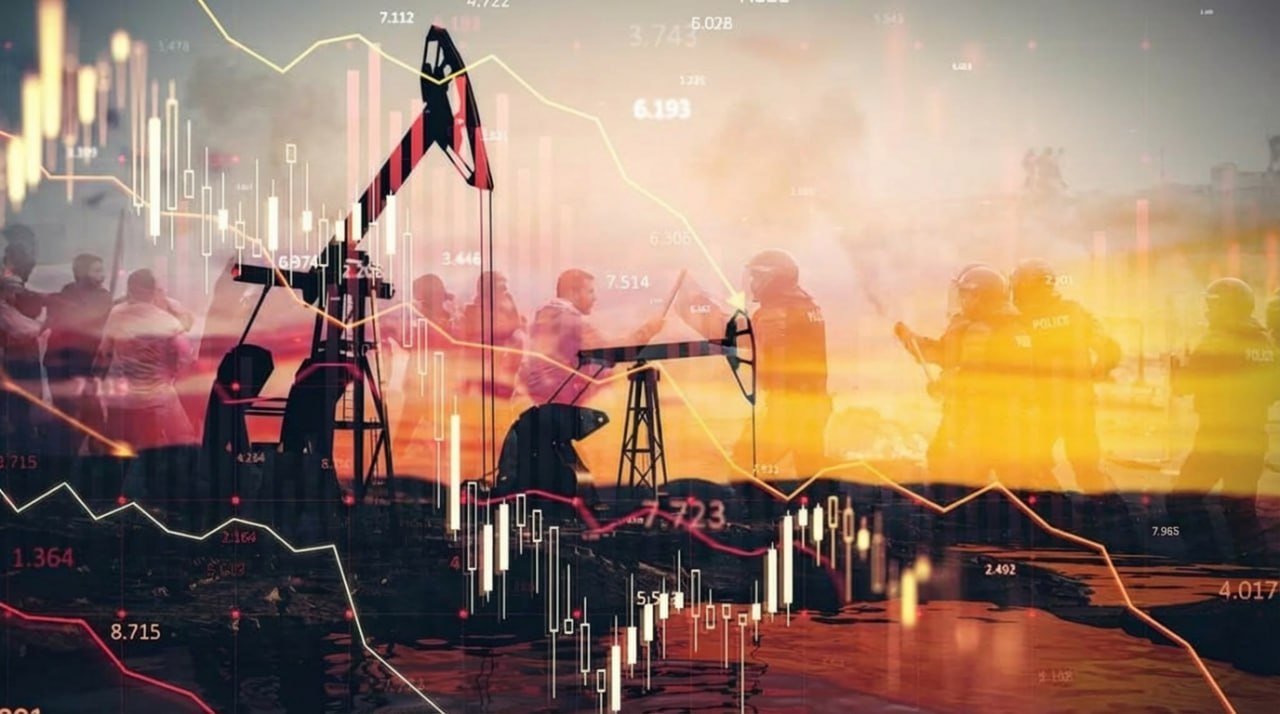
The Oil Crisis as COVID 2.0?
Now it seems as though the world must prepare for a new global crisis scenario with the war in the Middle East and the unfolding oil crisis. Let us therefore examine the events so far in the comprehensive context of the aforementioned visions of supranational organizations and related topics such as 15-minute cities, smart cities, digital identities, and central bank digital currencies. In doing so, we should also keep in mind the critics who warn of a growing technocratic state, digital surveillance, and restrictions on freedom of movement in the context of these measures.
On March 16, 2026, the Executive Secretary of the UN Framework Convention on Climate Change (UNFCCC) commented on the current situation to Reuters as follows:
"If there was ever a time to advance this energy transition and break dependencies that have shackled economies, it is now."
Shortly thereafter, the first European countries responded. For example, the Portuguese government introduced potential price caps for energy prices on March 19. Should this limit be exceeded, an energy crisis would officially be declared and intervention would occur from the top down. The electricity price caps would be accompanied by energy efficiency measures: households would have to reduce their consumption to 80% of the previous year's level and companies to 70%.
A day later, the International Energy Agency (IEA) published its report entitled "Sheltering from Oil Price Volatility." For those who do not know: the IEA is one of the most influential organizations in global energy policy. Its top-down forecasts and recommendations shape the decisions of virtually all Western governments. The IEA is, in the energy sector, essentially what the WHO is in healthcare.
In its report of March 20, the IEA presented a 10-point plan. In it, it calls on governments to restrict car travel, reduce flights, mandate working from home, or ban cooking with gas.
At the beginning of April, the IEA also published an "Energy Crisis Policy Response Tracker." This tracker records policy measures to manage the energy crisis. Thereby, the measures of all countries to manage the developing global oil crisis are specified, steered, and tracked from a central position. This is comparable to the role of the World Health Organization (WHO) during the COVID crisis.
The oil crisis does not only affect the energy sector. As the RNZ in New Zealand writes: "A month after the outbreak of the war in Iran, the increasing scarcity of crude oil threatens to expand into a scarcity of almost all goods." This crisis has led to a sharp rise in fuel prices and reduced the supply of petrochemicals. Petrochemicals are needed for the production of everyday items such as shoes, clothing, and plastic bags. The prices for materials such as plastic, rubber, and polyester are rising. Medicines and fertilizers can no longer be produced.
Many governments are now distributing subsidies and printing new money to keep the economy running in their own country a little longer. This buys some time until it will be painfully apparent that plastic, medicines, or food cannot be printed like money. Furthermore, inflation is being further driven up. This will sooner or later bring the idea of so-called digital energy relief credits or similar concepts into play. These may come in the form of direct payments to the digital wallets of users (CBDC). This is a programmable, centralized digital currency that can only be used for fuel or certain energy-related costs. Such a system was already introduced in India at the end of February. Under the program, food subsidies are credited directly to the wallets of the selected beneficiaries there in the form of programmable CBDC tokens.
The European equivalent of these digital wallets is called the European Digital Identity Wallet (EUDI Wallet for short) and is being forcefully introduced by the European Union. By the end of this year, every EU member state must provide a wallet for its digital IDs.
With the help of these digital wallets, programmable energy credits can be implemented for any government as soon as the population can no longer afford the increased prices. These credits can be linked to digital IDs at the touch of a button from a central position, be applicable only to certain purchases, and expire after a certain period of time. If this happens in the middle of a global crisis in which most people depend on oil and other scarce goods to get to work and feed their families, then very few will have a choice. People will line up for this in masses — similar to the vaccination a few years ago — in the quiet hope of a little normalcy and security.
This would implement the infrastructure for the fully controllable and traceable nature of central bank digital currencies globally and comprehensively. Those in power will of course tout these centralized systems as efficient, fraud-proof, and indispensable in the energy crisis. And perhaps one or another reader will believe this argumentation. I would like to suggest, however, that these centralized and digitally controlled measures, once implemented, are no longer reversible. Whoever holds power from this point on has an unprecedented level of control over every citizen. For if one can strip a person of all financial capacity at the touch of a button, it becomes life-threatening for them to express criticism of this power. In wise foresight, it should be pointed out that throughout human history, people have always fought for freedom and self-determination and not for censorship and control.
Paths Out of Dependency
Instead of falling into fear and panic in the face of the approaching storm, it is time to make conscious and long-term constructive decisions. Those who see no future for themselves and their family in a technocratic surveillance state should now begin creating parallel structures that correspond to their own values and principles. I am talking about self-sufficiency, barter exchanges, local networks, neighborhood help, informal cooperation, and local culture. These are endeavors that are forward-looking — acting peacefully and constructively. For we create our reality with our thoughts, words, and actions.
Nor will any politician or party come along and turn everything for the better. The problem is not the occupancy of government positions, but the government itself. The government apparatus cannot be changed, for this power apparatus is part of a system that fulfills its task very effectively. Its task, however, is not to represent citizens or improve their lives. It is rather about securing or expanding the existing power and control. It is crucial to understand that those in power will never have enough power or wealth.
The only one who can save you is yourself. It is entirely up to you to find new ways. For this, look at my articles in the "Agorism" category. A new era does not emerge by itself but is created by people like you and me. I promise you that this process will be fun, rewarding, and fulfilling on all levels. It is up to each one of us to make this new model a reality.
You might also like


New articles directly on Telegram
Follow @agorahoch3 and never miss a new post.