Next Level Propaganda
Modern propaganda has evolved beyond crude manipulation. It operates through algorithms, data profiles and behavioral psychology — and has become almost invisible.
In our first two articles on the overarching topic of propaganda, we discussed the origin and necessity of manipulative perception techniques for the continued existence of external authorities over the lives of large populations. (Article “What is Propaganda?”) With the progression of the 20th century, the systematic management of public perception became a fixed structural component of modern societies. (Article “Propaganda Through the Ages”) In this context, public relations emerged as a professionalized form of continuous opinion formation that serves as a panacea for expanding political and economic power. Now we want to address the continuing development into the 21st century.
After the Second World War and during the Cold War, the concept of information warfare between rival powers became established. A theoretical foundation for this development was formulated by the American diplomat George Kennan in 1948 with his concept of “Political Warfare,” which he submitted to the US Secretary of State in an internal memorandum. Therein, Kennan described political conflicts as a permanent competition below the military threshold. This was to be conducted through media, cultural influence, economic networks, and institutional cooperation. He also legitimized therein the state use of covert instruments such as support for opposition forces, disinformation, intelligence operations, and psychological warfare in the struggle for the so-called national interest. The state interest in East and West serves here as legitimation for all necessary measures to secure the loyalty of one’s own people toward the prevailing power structures in one’s own country and beyond. In order to maintain the appearance of objective analysis and academic neutrality, the forms of psychological warfare and public manipulation from this time onward ran mostly under neutral or scientifically sounding terminology such as “International Communication,” “Opinion Research,” or “Strategic Communication.”
Hybrid Warfare
From the mid-2000s onward, the concept of “hybrid warfare” increasingly entered the minds of the intellectual pace-setters of state propaganda. This new concept sought an even more intensive fusion of military, economic, political, and cultural means. The US military analyst Frank G. Hoffman defined “Hybrid Warfare” in 2007 as the coordinated and simultaneous use of conventional armed forces, irregular actors, information operations, political influence, and economic and psychological means within a unified strategic framework. On the surface, this is about influence strategies of rival states. These serve to shape geopolitical power structures. Ultimately, however, it is also about controlling one’s own population. Through permanent information stimuli, polarization, and the generation of uncertainty, citizens lose track of what is happening around them. In this state of insecurity, citizens naturally seek safety and certainty and apparently find it in the presented truth and the promised security of their own state structures. Such a society inevitably results in subtle mechanisms such as self-censorship, social fragmentation, and identity conflicts out of fear of newly emerging uncertainty and insecurity. From this time at the latest, information, economic pressure, social expectations, and political influence operations became the decisive strategic instruments of modern power.
Cognitive Warfare
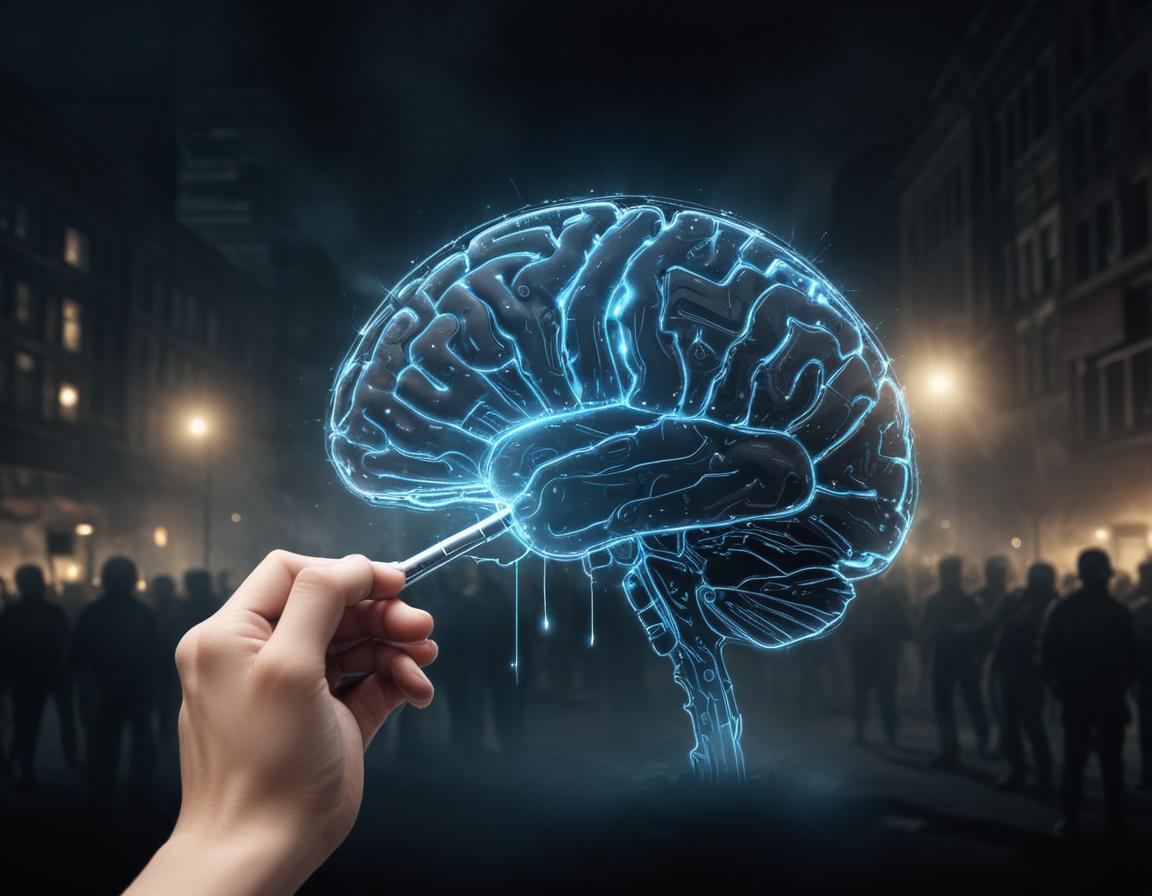
The latest escalation stage of state propaganda is “Cognitive Warfare.” Here, the focus is no longer just on classic manipulation of information, but on the entire thinking capacity of the population. With the help of algorithms, constant outrage, fragmentation, and emotionalization, the target group is to be completely destabilized through a permanent sensory overload. Citizens should no longer need to be convinced of a state truth, but should resign in the face of the overwhelming flood of information. Such a disoriented person no longer asks questions about the truth but only seeks belonging and security.
Propaganda researcher Jonas Tögel has written an entire book on this new, all-encompassing war under the title “Cognitive Warfare.” The term originates from security and futures research at NATO. NATO is — as most readers certainly know — the Western military alliance with a total of over 30 member states from Europe and North America. In a research report published in April 2025 in cooperation with the European Defence and Security Conference, titled “Cognitive Warfare — The Human Mind as the New Battlefield,” NATO writes openly about its efforts:
“The term ‘Cognitive Warfare’ designates a concept developing in both the academic and military fields. It aims to exploit human cognition and technology to disrupt, weaken, manipulate, or alter human decision-making processes. To date, neither the military nor the academic community has established a fully mature concept of cognitive warfare. In this context, NATO Allied Command Transformation announced in July 2024 that efforts to create such a concept were underway.” (p. 88)
In an official publication from December 2025, the term is also used in connection with the civilian population by NATO:
“Cognitive warfare aims to exploit facets of perception to disrupt, undermine, influence, or modify human decision-making processes by altering human behavior and perception with all means and making use of technological advances. Military and non-military tactics are employed that target both military actors and the civilian population throughout the entire crisis spectrum.”
Western governments are by no means the first or only states to engage with such thinking and research impulses. Similar concepts are known in Chinese military theory as “Three Warfares.” In fact, the Chinese government is playing a pioneering role. Already in 2003, China introduced the concepts of public opinion warfare, psychological warfare, and legal warfare when it revised the “Guidelines for Political Work of the People’s Liberation Army.” Chinese surveillance technology — from facial recognition software to smart ID cards — has meanwhile become a global export hit. Governments from all over the world are being inspired by the Chinese model of a totalitarian surveillance state.
In Russian strategy papers as well, it becomes clear that information warfare and the information domain are viewed as central elements of Russian military and security thinking. Similar efforts can also be observed, for example, in the Australian government. This is a universal research field of all states and governments in this world. For logically, every ruler has an interest in having even more power.
All military alliances and governments have one thing in common. The practices of cognitive warfare are always officially said to be practiced only by other states, which is why one is logically compelled to open this research field in order to protect oneself from the evil machinations of other states. It goes without saying that no government in the world officially employs such tactics against its own population. However, anyone who has understood the nature of the ruling power structures of our world recognizes the logical self-interest of all governments in the extension and intensification of control and surveillance in their own sphere of rule. Why then should one not use one’s own findings and technological means? Every citizen is the focus of this new cognitive warfare.
The Information Revolution as a Key Factor
Ultimately, the latest developments in state propaganda are closely connected to the information revolution and the establishment of the internet in the 21st century. In the era before the “World Wide Web,” state institutions possessed a general information supremacy. It was easy to spread a particular message through broadcasting, newspapers, television, and other channels. It was, however, difficult to critically question this message or to gain access to information critical of the government or war. Governments could sanction, defame, and regulate unwelcome media. To do this, every state merely had to maintain control over the centrally managed media houses in its own country.
With the increasing decentralization of information acquisition through the internet, this power relationship shifted. Meanwhile, over 80 percent of the world’s population owns a smartphone and can inform themselves comparatively freely. With a few clicks, every individual citizen has access to information that questions the interpretive authority of governments and other centralized institutions. These developments require a reorientation and expansion of state propaganda. This environment demands cognitive warfare.
At the same time, the Internet of Things (IoT) and technological progress in the form of smartphones, surveillance cameras, artificial intelligence, smart homes, digital currencies, and facial recognition software offer unprecedented possibilities for controlling and monitoring the population.
In her book “The Age of Surveillance Capitalism,” economist Shoshana Zuboff describes the digital “shadow text” that people leave behind when using smartphones and computers. These data — summarized as Big Data — allow a detailed analysis of human behavior and can also be used for military or political influence strategies with the help of algorithms and AI. The manager of the NATO Innovation Hub, François du Cluzel, stated in 2021 that the use of such data is at the center of modern military research. The aim is to better understand and, if necessary, influence the behavior of individuals.
From this development arises the idea of a “digital twin” that maps the psychological profile of a person. Building on this, so-called soft power technologies operate. Political scientist Joseph Nye describes Soft Power as the ability to get others to do what you want — without violence or coercion. A well-known example is micro-targeting, which was used by the company Cambridge Analytica. Through the analysis of large amounts of data, individually tailored messages could be created to deliberately influence the behavior of voters. The company came under international criticism after it became known that millions of Facebook data were used to conduct political campaigns and psychological influence operations.
To what extent the development and popularization of the internet itself was in the interest of global power structures may be posed here as a question. After all, the internet emerged from the military-funded research of DARPA and initially ran under the term “ARPANET.”
Conclusion
In pre-state times, individual groups could control the lives of millions of people by claiming to have received this right from a supernatural force. When this manipulative claim no longer worked due to growing public awareness, the greed for power had to find new explanations. The desire of elite forces to rule over land and society led to the political paradigm still current today. The world-famous myth states that the “common people” created concepts such as governments, military, and authorities as a compromise for a more peaceful world. In fact, however, these ideas were popularized by sophists and aristocrats who were convinced of their own superiority and of the firm opinion that the “common people” must be ruled and controlled. History shows how public awareness gradually became aware of these facts — in most cases through suffering and pain. The consequence was always increasingly complex and subtle explanations and structures of authoritarian power to keep the masses in check.
Ideas such as the social pact, the social contract, the national interest, the common good, the rule of the majority, and representative government have replaced the divine right of kings and the privileges of the aristocrats. In our modern culture, it is necessary to convince the individual citizen that he determines his own destiny in order to effectively rule him. For this reason, the rhetoric of the social control system under which we live is full of euphemisms that conceal the oppressive and violent nature of its existence. Thus the bombing of hospitals or schools is called a defensive strike, a robbery under threat of violence is called taxation, kidnapping and extortion is called justice, and groups of people who claim rule over certain geographic territories are called governments. All efforts to legitimize this power structure of an external power over the lives of all others can thereby be called propaganda.
Propaganda today is omnipresent — and at the same time invisible. It does not work through prohibitions but through shifts in meaning. Not through coercion, but through moral framing. Not through persuasion, but through limiting what is thinkable. Thus, information warfare transformed into cognitive warfare. Propaganda thus develops from controlling what people should think to influencing the way in which people think.
“The strongest and most effective force ensuring the long-term maintenance of power is not violence in all its forms employed by rulers to control the ruled, but consent in all its forms through which the ruled come to terms with their own submission.”
— Mark Boyle, Drinking Molotov Cocktails with Gandhi
Anyone who wants to understand propaganda must stop looking for it only in others. The decisive question is not whether propaganda exists, but whether it is recognized as such.
Those who want even deeper insights into the potential future of state surveillance and propaganda methods will find them, for example, with Tom-Oliver Regenauer or Jonas Tögel.
Series: Propaganda
- 1 What is Propaganda?
- 2 Propaganda Through the Ages
- 3 Next Level Propaganda