What is Conscious Resistance?
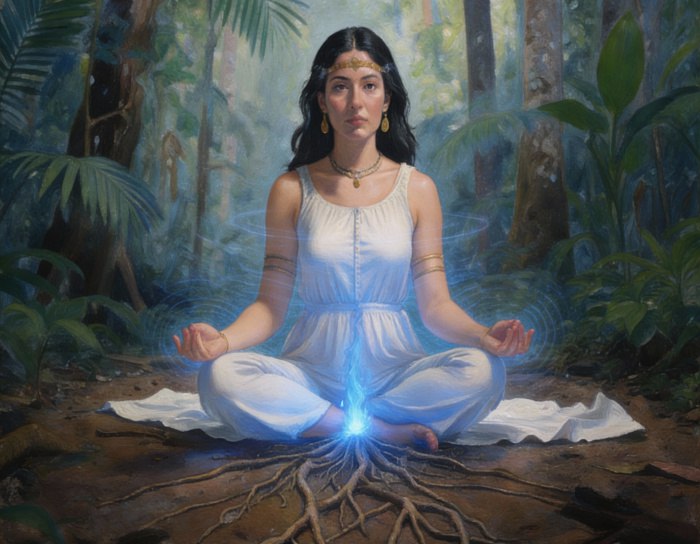
Conscious resistance is neither passive acceptance nor violent rebellion. It is a third path: deliberate, grounded, creative opposition to systems of control — rooted in self-knowledge and community.
This article is a translation of the first chapter from the book ‘The Conscious Resistance: Reflections on Anarchy and Spirituality’ by Derrick Broze and John Vibes. [Original title: What is the Conscious Resistance?]
On this world, there is a deep and thousand-year-old struggle that has produced an indescribable amount of suffering. It is a struggle for freedom and peace, while so-called civilizations are marked by slavery, genocide, and war. Today, many of us live with the illusion that these horrors belong to the past or are problems of distant countries. They are, however, just as real as in the Middle Ages. These problems are experienced in Germany just as much as in the rest of the world.
Many social and political changes are needed to heal the widespread suffering in the world. The entire structure of our society must change in order to create peace and freedom for all people. A truly utopian world is impossible, but a world without systematic and socially accepted violence would be a true paradise compared to our current world.
To achieve the necessary social and political changes and end violence, we must choose an approach that has not been tried before. We cannot simply storm the gates of the castle and hang the rulers from the tallest trees. That would only lead to a new ruler on the same throne, as we have seen repeatedly throughout history.
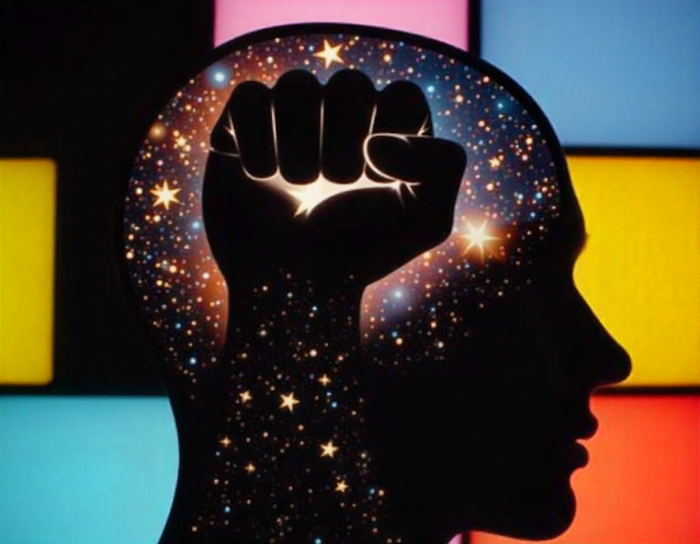
True change comes from within. To break this cycle of madness, an evolution of consciousness is required. The state and all its predatory appendages — such as the corporate and military-industrial complexes — are more than just armed groups of people that need to be overthrown. They are bad ideas that can be discarded as obsolete with the right combination of good ideas.
While the fight for freedom has grown, our understanding of freedom has also grown.
The desire to understand and strive for freedom has existed as long as there have been conscious beings on this earth. Throughout history, various cultures have had their own ideas and visions of how freedom manifests. We will define these important terms carefully, since they can have different meanings for different people.
There are two ways to define philosophical terms such as government, country, democracy, capitalism, communism, freedom, or slavery. Either we define them theoretically or we define them by their practical and real function in the world.
The word propaganda, for example, has a negative connotation for most people and is associated with psychological manipulation. However, a hundred years ago propaganda was simply used as another term for media. Many modern terms are strongly shaped by their theoretical definition, but not by how they function in reality. In this book, we will define terms not only by their current definition in the dictionary, but also by their actual meaning in history.
It is important to clearly define freedom as one of the basic principles of this conversation. In the Webster dictionary, freedom is defined as follows:
The quality or state of being free, as
A: the absence of necessity, coercion, or constraint in choice or action B: liberation from slavery or restraint or from the power of another — independence C: the quality or state of being exempt from something onerous — freedom from supervision.
Note the first definition of “free”: “The absence of necessity, coercion, or constraint in choice or action.” This is the definition on which our vision of freedom is based. We advocate not only for a voluntarist society free from coercion, but also champion that every human being has full control over their life and affairs.
Despite the widespread opinion that humanity would revert to a barbaric state without governments, we are of the view that a self-determined individual is better able to lead a free and fulfilling life.
On the basis of this definition of freedom, we can begin to analyze human history and decide whether we live in a relative state of freedom or at various levels of slavery. Through the study of philosophy, economics, politics, and history, we can assess whether humanity is freer today than in the past or whether we have gradually lost our freedoms.
In the following, we encourage not only the study of humanity’s physical striving for freedom, but also our daily inner striving for freedom. We are of the opinion that at every point in time there is a far deeper and extremely personal “struggle” for freedom.
This is our internal striving, the mental struggle, the war that is waged between our desire for our “highest good” and our concerns and self-imposed restrictions, maintained by our own internal tyrants. This is precisely where humanity’s greatest struggle is fought.
Based on the results of our research and experiences, we come to the conclusion that it is extremely important and necessary to uncover and question the physical manifestations of power. Equally decisive is the ability to confront and question our concerns, fears, uncertainties, and pain. No matter how hard and how long people try to implement a freer world: we are doomed to repeat the same mistakes if we cannot overcome our inner demons.
Poverty, corrupt governments, and wars are manifestations of our inner struggle. We allow this farce to continue. This shows that we are a needy species. We yearn for deep healing. As long as this healing has not taken place, humanity will be bound to control by an external source or a “leader” — and in fact people will beg for this control.
“Consciously resisting” means deliberately engaging in self-reflection.
Without knowledge of our concerns, hopes, fears, dreams, uncertainties, and strengths, we cannot truly know what freedom means to us personally. Becoming aware of one’s own actions is one of the most important steps to understanding and claiming one’s own freedom. From this clear state of mind, we can lead by example and support others in their pursuit of self-discovery and freedom.
This book is addressed to people who have already developed a certain understanding of the search for freedom, but who are ready to question their traditional notions of where freedom begins and ends. The treatises relate to people who live as free people in the physical world but desire a deeper, more fulfilling experience of freedom.
These words are addressed to the spiritually interested. They are also addressed to investigators. And they are addressed to travelers. They are addressed to people who value themselves spiritually. But they are also addressed to people who still need to discuss how to achieve freedom. They are also addressed to people who are unsettled by the dark aspects of our five-senses reality. All these people must overcome these aspects.
We want to clarify that this book does not represent a definitive treatment of the topics addressed. Rather, we hope to ignite a conversation and healthy discussion about how far one should follow one’s desires for freedom. None of the ideas presented should be seen as an argument for a monopoly or as a “universal solution” for the model of freedom.
In his book ‘New Libertarian Manifesto’, Samuel E. Konkin, the founder of Agorism, writes:
“There is certainly not one way, not one line diagram for freedom. But there is a family of curves, a space full of lines that lead the freedom lover to their goal, a free society, and this space can be described.”
We believe that the combination of self-determination and self-reflection is the best path to a free society.